
Chimney Cleaning vs. Gas Fireplace Repair: Which One Do You Actually Need?
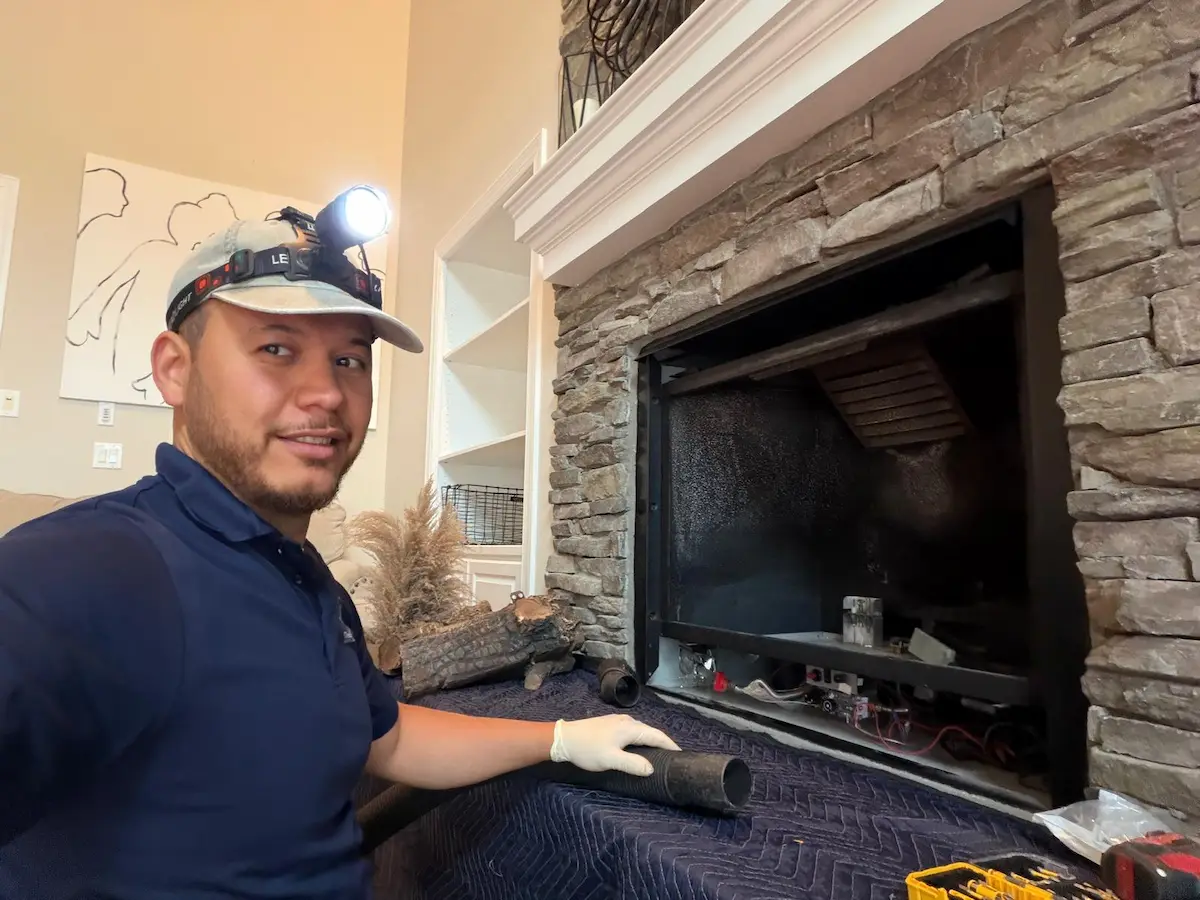
Homeowners call us all the time asking for a "chimney cleaning" when what they really need is a fireplace repair — and occasionally the other way around. It's an easy mix-up, because both problems live in the same corner of the room. But they're two entirely different jobs, done by two different trades, and knowing which is which saves you a wasted service call.
Here's the plain-English difference.
Chimney cleaning is about what you burn
Chimney cleaning — the classic "sweep" — exists because of wood smoke. When you burn wood, the smoke leaves behind creosote, a tarry, flammable residue that coats the inside of the flue. Left alone, it builds up over a season of fires and becomes the leading cause of chimney fires. That's why an annual inspection and cleaning is the standard maintenance rhythm for anyone who burns wood.
So chimney cleaning is what you need if you have:
- A wood-burning fireplace or wood stove you actually light.
- A masonry chimney with visible soot, a smoky smell, or poor draft.
- A fireplace you haven't had inspected in a year or more of use.
- Any sign of animals or nesting debris in the flue (a surprisingly common cause of draft problems and smoke pushing back into the room).
This is our lane. CleanFlow Pros handles chimney cleaning and flue inspection across Northern Virginia — removing creosote and buildup so your next fire burns safely and drafts the way it should.
Gas fireplace repair is about a machine
A gas fireplace is a different animal. There's no wood, no smoke, and — in a sealed, factory-built direct-vent unit — no creosote to sweep. When a gas fireplace acts up, it's almost never a "dirty chimney" problem. It's a component problem: a pilot that won't stay lit, a flame that keeps dropping, a unit that won't ignite at all.
You need a gas fireplace repair technician — not a chimney sweep — if your fireplace:
- Won't light, or the pilot lights but won't stay lit when you release the knob.
- Lights but the flame drops out or won't run the main burner.
- Has a weak, sooty, or lazy flame, or the glass is fogging up.
- Makes a clicking sound with no ignition, or you smell gas (turn it off and call immediately).
These trace back to parts like the thermocouple, thermopile, pilot assembly, or gas valve — appliance work that's outside what a cleaning crew does. For that side, we refer our Northern Virginia customers to Capital Gas Fireplace Repair(opens in a new tab), who specialize in exactly this across all brands. Commonly owned — both companies operate under Etazon LLC. Sending you to the right trade the first time beats charging you for a cleaning that won't fix the problem.
The gray area: gas logs inside an old masonry chimney
Here's where it gets genuinely confusing, and where honest advice matters most.
A lot of Northern Virginia homes have gas logs or a gas insert installed inside a fireplace that was originally built for wood. In that setup, both trades can apply — but to different parts:
- The appliance— the burner, pilot, valve, ignition — is gas fireplace repair (Capital's work).
- The masonry chimney and flue it sits in still exists, and if that flue vents combustion or you ever burn wood in a separate fireplace in the house, it still needs periodic inspection and cleaning (our work).
The one thing that's not true: a sealed, factory-built direct-vent gas fireplace does not need creosote cleaning like a wood-burning flue. If someone tells you it does, be skeptical. When you're not sure which type you have, ask — we'll tell you honestly, even when the honest answer is "you don't need us for that."
Quick way to tell which call to make
- Do you burn wood, and is the problem smoke, soot, smell, or draft? → Chimney cleaning.
- Is it a gas fireplace that won't light or stay lit? → Gas fireplace repair.
- Gas logs in an old brick fireplace, and not sure? → Start with the appliance if it won't run; add a flue inspection if you also burn wood anywhere in the home.
Still not sure? Call CleanFlow Pros at (571) 946-7788 or reach out here and describe what your fireplace is doing. We'll point you to the right fix — even if that fix isn't us.
Common questions
Usually not. A sealed, factory-built direct-vent gas fireplace produces no creosote, so there's nothing for a chimney sweep to remove. The exception is gas logs or an insert installed inside an older masonry chimney, or a separate wood-burning fireplace in the same home, which still need periodic inspection and cleaning.
It comes down to the symptom. Smoke, soot, a smoky smell, or poor draft on a wood-burning fireplace means chimney cleaning. A gas fireplace that won't light, won't stay lit, or has a weak flame means gas fireplace repair, which is an appliance job rather than a cleaning one.
No. That's almost always a component issue like a failing thermocouple or thermopile, not a chimney problem. It needs a gas fireplace repair technician, not a chimney cleaning.