
Found a Bird Nest in Your Dryer Vent? Here's What to Do Next
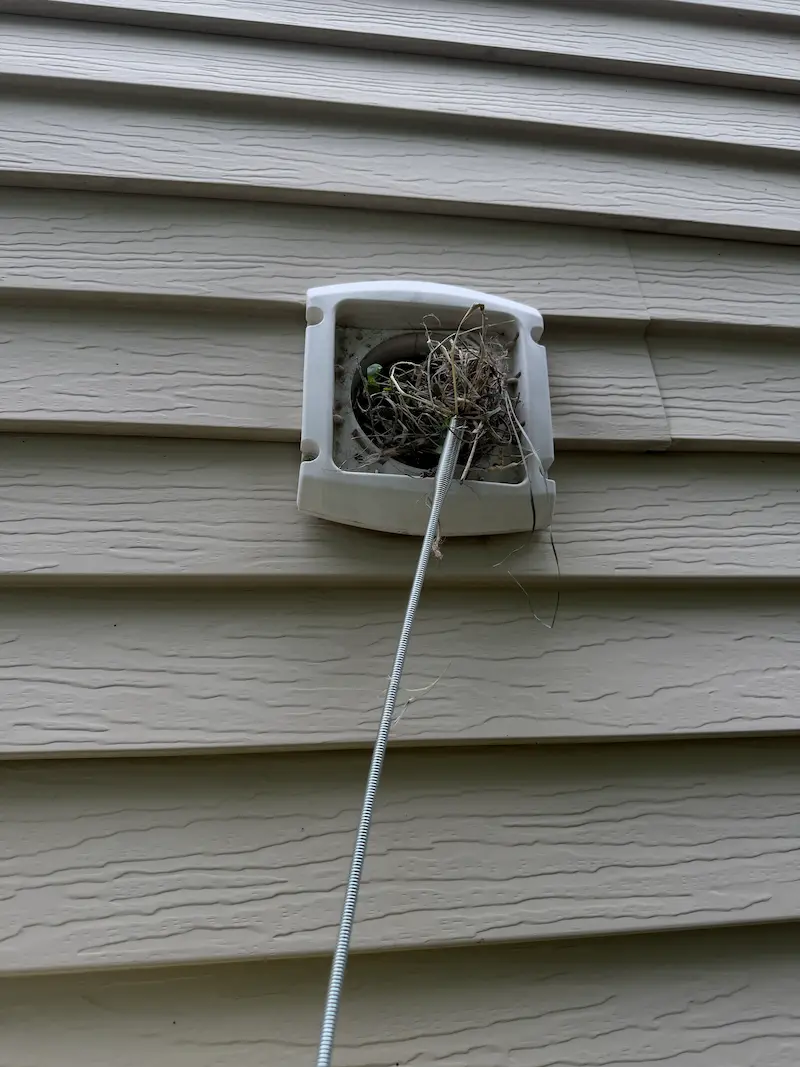
Every spring, Northern Virginia homeowners hear the same thing: scratching or chirping behind the laundry-room wall, a dryer that suddenly takes two cycles to finish, and — eventually — a wad of twigs poking out of the exterior vent hood. A bird has decided your dryer vent is prime real estate.
It usually is, from the bird's point of view. The exterior vent hood is warm, sheltered, and elevated, and the little damper flap that's supposed to keep the outside out often stops sealing after a few years. That's the exact gap birds slip through to nest.
Here's what actually matters once you've found one — and the two very different jobs it creates.
Why a nested vent is more than a nuisance
A dryer vent has one job: move hot, moist air and lint out of your house. A nest packed into the run blocks that path completely. Two things follow, and neither is minor.
Your dryer overheats. When exhaust can't escape, heat backs up into the machine and the duct. In the residential clothes-dryer fires studied by the US Fire Administration, failure to clean was the leading contributing factor, accounting for 34% (USFA, Clothes Dryer Fires in Residential Buildings(opens in a new tab)). A vent stuffed with nesting material is a blockage in the most literal sense.
Your clothes stop drying. Long before anything scorches, you'll notice the symptoms: clothes still damp after a full cycle, a hot laundry room, a musty smell, and higher energy bills as the dryer runs and reruns trying to finish.
Don't just reach in and pull it out
It's tempting to yank the nest and move on. Two reasons not to:
- 1It may be an active, protected nest. Many native birds are protected under the federal Migratory Bird Treaty Act. If there are eggs or chicks inside, removing the nest yourself can be both inhumane and against the law. Timing and method matter, and that's genuinely a specialist's call.
- 2Nesting damages the duct. Birds don't nest gently. Damper flaps get bent, hoods get pried loose, and the pressure of a packed run can crush or disconnect ductwork behind the wall. Clearing the nest without checking the run just hides the real problem.
This is why the job splits cleanly in two — and why the honest answer is that it takes the right person for each half.
Step one: humane removal and a guard so it doesn't happen again
Getting the bird and nest out safely — and keeping the next one from moving in — is bird work, not cleaning work. For that, we send our Northern Virginia neighbors to the specialists at Nova Bird Removal & Vent Cleaning(opens in a new tab), who handle humane removal, nest cleanup, and bird-guard installation on the exterior hood. Commonly owned — both companies operate under Etazon LLC. A properly fitted guard is the part most homeowners skip — and it's the difference between solving this once and solving it every spring.
Step two: clean the full run and check for damage
Once the vent is clear, the run still needs attention. Nesting leaves behind droppings, feathers, and packed debris well past the hood, and it's often bent the duct along the way. That's our half of the job.
We clean the entire dryer vent run — not just the visible end — and inspect it for the damage nesting causes. If we find a crushed, disconnected, or badly routed section, we don't just flag it and hand you a bill. We repair or re-route it on the same visit, so you're left with a vent that actually vents.
Cleaning-only crews stop at clearing the blockage. We own the whole lifecycle — clean, inspect, repair, re-route — which is exactly what a nest-damaged vent needs.
The short version
- A nest in your dryer vent is a real fire and airflow risk — not just an annoyance.
- Don't tear out an active nest yourself; it may be protected, and you'll likely miss duct damage.
- Get humane removal and a bird guard from a bird specialist, then have the full run cleaned and inspected for damage.
Cleared a nest and want the run cleaned and checked properly? Call us at (571) 946-7788 or book an inspection. We'll tell you what you need — and only what you need.
Common questions
Yes. A nest blocks the airflow the vent needs to carry heat and moisture out of your home. When exhaust can't escape, the dryer and duct overheat, and a blocked run is a real fire risk — which is why a nest is never something to leave in place.
It's not recommended. Active nests of many native birds are federally protected, and pulling a nest out without checking the run leaves behind droppings and often hidden duct damage. Humane removal plus a full-run cleaning and inspection is the safer route.
A properly fitted bird guard on the exterior vent hood, installed after the vent is cleared and cleaned. Guard installation is handled by a bird-removal specialist; the cleaning and any duct repair is handled by a vent crew.